
The Art and Science of Building Intentional Corporate Culture
Lessons from Ron Thalheimer
Collaborative Culture
Episode 18

INTRODUCTION
What does it actually take to build an intentional culture inside a high-stakes organization—especially one navigating constant change?
In this episode of Collaborative Culture, hosts Dr. Kristine Gentry and Monica M. Smith talk with longtime financial services executive Ron Thalheimer about the practical work of turning an organization’s cultural intentions into consistent, everyday behavior.
Drawing on more than 40 years in banking, insurance, and investment services—including more than two decades at Fidelity Investments—Ron explains why culture requires more than a compelling set of values. Leaders must clearly communicate what is expected, model those expectations consistently, listen to what employees and customers are experiencing, and address behavior that contradicts the culture they claim to want.
The conversation also explores how leaders can build culture through observation and direct engagement, what becomes more difficult in remote environments, and how organizations can tell whether cultural change is producing meaningful results.
This episode page includes a complete transcript for accessibility. You can listen above or read the full conversation below.
WHAT IS INTENTIONAL CORPORATE CULTURE?
Intentional corporate culture is the deliberate alignment of an organization’s stated values, leadership behavior, expectations, decisions, and everyday ways of working. It requires leaders to define what the desired culture looks like in practice, model those behaviors consistently, and respond when actions contradict the organization’s message.
Culture may begin with leadership, but it is reinforced—or undermined—through the choices people make throughout the organization. Building an intentional culture therefore requires both clear direction from the top and active participation from employees at every level.
KEY TAKEAWAYS
- Culture starts with clarity and consistency
Employees need to understand what the organization is trying to create and what that means for their daily work. But communication alone is not enough. Leaders must reinforce their message through consistent decisions, actions, and behaviors.
- Culture cannot be delegated to HR
HR can support culture-building, but it cannot create culture on behalf of the organization. Senior leaders establish priorities, allocate resources, model acceptable behavior, and signal what truly matters through the actions they reward or tolerate.
- Unaddressed misalignment can undermine cultural change
Employees notice when leaders say one thing but allow another. If behavior that contradicts stated values goes unaddressed, it can quickly weaken trust and convince employees that the culture initiative is more rhetoric than reality.
- Leaders learn culture by getting close to the work
Ron describes the importance of walking the floor, listening to employees, and observing how work actually happens. Kristine connects this practice to cultural anthropology: leaders cannot understand a culture solely through reports and surveys. They also need to observe patterns, relationships, rituals, and unwritten rules.
- Remote work changes how leaders experience culture
Distributed work can make it harder for leaders to observe team dynamics, identify emerging concerns, and create informal opportunities for learning and connection. These limitations may be especially consequential for early-career employees and organizations attempting significant cultural change.
- Cultural progress should be measured from multiple perspectives
Ron recommends listening to employees, customers, and internal business partners rather than relying on a single measure. Patterns in retention, tenure, advancement, feedback, and business relationships can help leaders understand whether the culture is becoming healthier and more effective.
FROM REACTIVE VENDOR TO PROACTIVE PARTNER
Ron illustrates these principles through a transformation he led within National Financial, part of Fidelity Investments.
The service organization had historically operated reactively: clients contacted the organization when they needed assistance, and the team responded. Ron and his colleagues wanted to create a more proactive service model—one in which employees understood their clients more deeply, anticipated needs, and developed relationships that extended beyond individual transactions.
The shift included establishing a more structured operational relationship function, assigning senior team members to business segments, and implementing technology to support a consistent approach to client service. The changes initially generated internal resistance. Employees had to adopt unfamiliar systems and change established ways of working before the benefits were fully visible.
Customer feedback became an important turning point. As clients began responding positively to the new approach, employees could see that the changes were improving real relationships and outcomes. Over time, the organization’s reputation evolved from that of a service vendor to that of a trusted business partner.
The example demonstrates an essential lesson about culture change: people may not embrace a new way of working simply because leaders announce it. They need clarity, reinforcement, practical support, and credible evidence that the change is producing something worthwhile.
Questions Explored in this Episode:
- What makes a corporate culture intentional?
- Who is responsible for building and reinforcing workplace culture?
- How can leaders translate cultural values into observable behaviors?
- What happens when leaders tolerate behavior that contradicts their message?
- Why is direct observation an important leadership practice?
- How does remote work affect culture-building and employee development?
- How can organizations measure whether cultural change is working?
- What can leaders learn from customers and internal business partners?
- How can a service organization move from reactive support to proactive partnership?
- What helps employees move from resistance to adoption during transformation?
Read the Episode Transcript
This transcript has been edited for clarity and readability. Repeated words, false starts, recording directions, and non-substantive verbal acknowledgments have been removed. The meaning of the conversation has been preserved.
The Art and Science of Building Intentional Corporate Culture
Episode Transcript
This transcript has been edited for clarity and readability. Repeated words, false starts, recording directions, and non-substantive verbal acknowledgments have been removed. The meaning of the conversation has been preserved.
MONICA M. SMITH:
Hello to our listeners here on Collaborative Culture. Happy to see our returning listeners, and welcome to our new listeners. Kristine, would you like to introduce yourself?
DR. KRISTINE GENTRY:
Sure. Hello, everyone, and thank you for joining us. I am Dr. Kristine Gentry, CEO and founder of Culture Grove. I work with leaders to create strong, values-aligned cultures so their employees are engaged, their customers are happy, and their profits grow.
MONICA M. SMITH:
Those all sound like good outcomes. I am Monica M. Smith, CEO of Tradewinds Career Consulting, delivering workshops, speaking engagements, and coaching on global collaboration through leadership skills and global team building. Kristine and I meet here every other Wednesday to explore—among ourselves and with expert guests—the art and science of creating, nurturing, driving, and, when necessary, repairing models of collaborative culture. Today we are excited to welcome a great guest: Ron Thalheimer. Ron and I have worked together for 30 years. Ron is a wonderful guest for Collaborative Culture because he exemplifies positive, authentic leadership while running large service organizations in financial services. To my knowledge and in my experience, he never sacrificed good corporate culture for service delivery, or vice versa. We worked on large, high-stakes transformation projects together at Fidelity, and Ron always received the highest respect from his peers and from internal and external customers. That is not to say there was never tension, as there always is in an ambitious environment, but he consistently received the highest praise. Your leadership spans many years at Fidelity, but before that you were with the First National Bank of Chicago. Was all of that work in London, or was some of it in Chicago?
RON THALHEIMER:
I spent a number of years in banking and insurance in Chicago, initially with Continental Bank and then with First Chicago, which are now Bank of America and JPMorgan Chase. My last three years were in London with what was then the First National Bank of Chicago.
DR. KRISTINE GENTRY:
Ron, can you tell us a little more about yourself and give us an overview of your career and how you got to where you are now?
RON THALHEIMER:
Certainly. I have spent more than 40 years in financial services in a variety of roles, as Monica just mentioned. I started in banking in Chicago with Continental Bank and the First National Bank of Chicago, which, through mergers and acquisitions, are now Bank of America and JPMorgan Chase. First Chicago then asked me to spend time in London doing transformation work with its bank operating products group. While I was there, some of those mergers occurred and we became First Chicago NBD—a “merger of equals.” They could not even come up with a new name. One thing led to another. A former boss reached out and said, “I’d like to see you in Boston, if you don’t mind.” I then spent the next 22 or 23 years in Boston with Fidelity Investments. As Monica mentioned, I held a variety of service and operating-product leadership roles. I started by running the transfer agency for the Advisor Funds, then moved into the brokerage side of the business, where I spent most of the rest of my Fidelity career. I held leadership roles involving multiple offices and clients, nationally and internationally. The experience I gained in London was extremely beneficial throughout the rest of my career at Fidelity. I left Fidelity at the end of 2017 and have since done consulting, including work with Broadridge. That brings me here today to talk with you about culture and leadership.
MONICA M. SMITH:
What is interesting about your varied journey is that you have worked at large institutions through mergers and acquisitions, and now you also help startups in some cases. The culture question is always present. Let’s start with the foundational culture question: How do you approach building an intentional culture in an organization?
RON THALHEIMER:
It begins with clearly communicating the organization’s expectations and goals. Those goals must then be supported by consistent actions and behaviors. Once leaders establish the framework, goals, and expectations, they must demonstrate the behaviors that support them. That is foundational to building, changing, and transforming an organization into one with a strong service-, customer-, and employee-oriented culture.
DR. KRISTINE GENTRY:
That is a great point, and I appreciate that you mentioned behavior. I recently read an article about AI rollouts. Many organizations are giving people prompts and tools without addressing the need to change behavior. Employees may think, “I’m doing my job just fine. Why would I stop and do this?” AI adoption requires both behavior change and culture change, and that part is often skipped. Whose role do you think it is to create a strong culture?
RON THALHEIMER:
Creating culture begins with setting goals and expectations, and that starts at the top. As a leader, I would envision the culture the organization needed to achieve its goals, but that vision then had to spread throughout the management team and, ultimately, the entire organization. As an organization evolves, there will always be people who do not believe in the change or do not want to embrace it. Once leaders set the tone, they must communicate consistently and correct behavior that does not align with the desired culture. You do not want to make an unnecessary example of someone, but when you learn about behavior that contradicts the culture, you must address it promptly and directly. Nothing is more damaging during culture change than employees hearing the right words while seeing contradictory actions from leaders or colleagues go unaddressed. They begin to think, “They are not doing it, so why should I?” That can poison the entire transformation. Culture starts at the top, and the leadership team must talk the talk and walk the walk. The entire organization must eventually support and embrace it, and that takes time. It is not the flip of a switch.
DR. KRISTINE GENTRY:
I think everyone will participate only if the direction comes from leadership. Too often, an organization appoints one person in HR whose job is “culture,” but one person in HR cannot create the culture. It must start at the top, and everyone has to come on board. Culture is shaped as much by what you allow to happen as by what you say you do. If leaders allow behavior that contradicts their stated values, that tolerated behavior becomes the culture—not the words. I think you have already addressed the next part of my question, so let’s move on.
MONICA M. SMITH:
As an executive leader, how did you focus on your own professional development to keep improving the way you articulated, rewarded, and reinforced culture? You also raised an important point about addressing harmful behavior. I used to call it “weeding the garden.” You do not always have to remove the person; perhaps the person belongs elsewhere, but they should have an opportunity to adapt to the new culture. How did you approach your own development?
RON THALHEIMER:
I found this more difficult during my recent experience working remotely. When I led organizations in person, I got out on the floor, walked around, and talked with people. I asked how things were going and about specific clients, but I also learned a great deal simply by listening to conversations and engaging people. I learned this in part from Kevin Kelly, who was president of the Fidelity Advisor Funds at the time. When he visited us in Smithfield, Rhode Island, he would walk into my office and ask how things were going. At first, I would immediately start talking about the business. He would nod, say, “Great,” and leave after about two minutes. After this happened twice, I realized that although he cared about the business, he wanted to connect with me personally. He wanted to know what I was doing and how my family was. I initially assumed he was too busy for that, but I came to appreciate and embrace his approach. As I walked the floor, I began engaging people personally and getting to know them. That is part of culture-building, too. Whether you are working with employees, business partners, or clients, a partnership mentality extends beyond business. We spend too many of our waking hours at work to ignore the personal dimension. That lesson from my early Fidelity years served me well.
MONICA M. SMITH:
In a way, that is more humanly fulfilling. I had a similar experience with Kevin Kelly when I worked with the Advisor Funds in a much smaller role. One day, he walked into my office and commented on a photograph I had of a volcano in Hawaii. He was prepared, but in a very relaxed way. He did not ask about my children, as people often did at the time, when I was unmarried and did not have children. Instead, he said, “How are things? I hear you love to travel.” He had done his homework, and I was impressed by how considerate that was. I have never forgotten it.
DR. KRISTINE GENTRY:
That's awesome. That is a wonderful example. Relationship-building is such an important part of creating a strong culture. So is getting out into the organization—not only talking to people, but watching what is happening and how people work. That is a very anthropological approach. Observation is a major part of how we practice anthropology. You cannot learn the same things while sitting in your office and only talking to people. We also miss things when we interact only through Zoom. When leaders take advantage of being in an office by moving around, observing, and interacting, they can learn a great deal that they would otherwise miss.
RON THALHEIMER:
Absolutely. That is something Monica and I have discussed informally coming out of the pandemic and the shift to remote work. In my work with Broadridge and some large clients, I was almost entirely remote. I visited the client and went into the office a few times, and I indirectly managed several teams. I did not have the same degree of authority and responsibility I had at Fidelity or in banking, but I thought about some of the younger employees working remotely and the challenge that creates for a leader or manager. You cannot walk around remotely. You completely lose that opportunity. At that point in my career, I personally enjoyed walking upstairs to my office with a cup of coffee, but I could see remote work being challenging for a younger employee or a newer organization. Remote work may be beneficial for certain things, but other elements are missing—especially when an organization is trying to shift its culture.
MONICA M. SMITH:
I completely agree. We often say on this podcast that leadership and culture are strategic skills, not soft skills. Leaders must know how they will create outreach and two-way conversations. That looks very different remotely and requires different approaches. Here is my follow-up question: Have you ever needed to influence your peers or senior leaders to make the culture more effective and improve business results?
RON THALHEIMER:
One example occurred when I was running service operations for National Financial, Fidelity’s correspondent clearing business. Our service ratings were average to low, and clients viewed us as a vendor. I was brought in to transform the group into a higher-performing service organization. The existing model was inefficient because clients called their service managers or operations directly with every type of question. We developed Service Center, a desktop tool that let clients choose a specific request from a detailed menu and receive an expected resolution time. Relationship managers and some senior business leaders initially pushed back. The operations and service leaders supported it because we believed it would improve both efficiency and satisfaction. We were also clear that clients could still call whenever an issue was urgent. As routine calls declined, client service managers gained time to create scorecards and take a more proactive approach. Clients could submit routine questions—such as the status of a transfer or account opening—electronically and usually receive a response within 24 hours. We called it the “Missouri process”: we had to show people that it worked. Over time, clients and day-to-day operations teams saw the value. Efficiency and service levels improved, and Net Promoter Scores rose significantly. Some relationship managers remained skeptical until two senior representatives from key clients spoke at a conference. Without my knowing what they planned to say, they spent their presentation praising Service Center and the new relationship model. I was sitting there with an enormous grin. We had shared data showing that the model worked, but hearing clients endorse it publicly became the tipping point. It was gratifying and confirmed that the change was leading us where we wanted to go. freed up because we weren't getting as many calls, we freed up the client service managers to do client scorecards where they could see based on the information they were inputting that we were in fact meeting or beating the resolution times for the basic simple questions. What's the status of my transfer of assets? What's going on with my account opening? Those types of questions where they would simply pick up the phone and call before they could logic, send it to us electronically. They would be told and usually it was within 24 hours. They would get a response if now if they had one of their clients on the phone and it was a hot issue and they needed an answer right then and there we said Please pick up the phone call us. We'll give you an answer but try this process We had as I said the clients It was the as I called it the Missouri process we had to show them And slowly but surely the clients and the day-to-day operational folks who
MONICA M. SMITH:
Relationship managers speak the language of relationships. Scorecards alone were not enough; they needed to hear the clients’ experiences directly. Once they did, it changed the conversation. That is an excellent example.
DR. KRISTINE GENTRY:
That is a great example. As an executive leading large organizations in constant motion, with many initiatives underway, how did you assess cultural success? How did you know the culture was moving in the right direction?
RON THALHEIMER:
One lesson I embraced throughout my career is that the only constant is change. To assess how culture is evolving, I look at feedback from employees, customers, and internal business partners. That feedback may come from walking the floor or from more formal mechanisms, but leaders should listen to how people are talking and what they are talking about. Tenure and turnover also matter. Early in a culture shift, people who do not accept the new expectations and behaviors may choose to leave. Over time, however, you begin to see a growing core of people who feel valued and included in the process. They stay, seek advancement within the organization, and help strengthen the culture. Retention, internal mobility, and feedback from employees, business partners, and clients are important measures of progress.
DR. KRISTINE GENTRY:
It sounds as though you were constantly thinking about culture. Did you consciously recognize that a strong culture keeps people engaged and moving in the right direction, or did you look back later and realize that you happened to be very good at culture-building? How intentional was it?
RON THALHEIMER:
I do not think I was constantly asking myself, “What is the culture?” In almost every situation, whether in banking or at Fidelity, I was brought into an organization because something was not going well and transformation was needed. I focused on what the organization had to do to reach the next level for employees, business partners, and customers. It all came back to culture. I did not enter saying, “I need to shift the culture.” I said, “Here is our goal, and here is what we must do to achieve it.” Those actions translated into a cultural shift because that was the only way to reach the goal. Culture was therefore embedded in everything I considered. I communicated consistently and repetitively, using memorable language so that people eventually knew how I would answer a question before I answered it. That consistency helped ingrain the ideas and culture throughout the organization.
DR. KRISTINE GENTRY:
That is so good. I am struck by how naturally you wove culture into the way you worked. Many leaders focus on specific operational outcomes without continually considering the behavior change required to achieve them. Now I understand why Monica was so insistent that we invite you. You are an excellent example of how to do real culture work.
MONICA M. SMITH:
You had to hear it from the man himself. What I love is that culture is completely integrated into how you describe leadership. There is always a human dimension: people want to win, achieve, and accomplish something together for internal and external customers. Leaders who separate that from ambition miss the benefits of culture—the resilience and commitment of people who will show up on Saturday without being asked when something needs to be done.
DR. KRISTINE GENTRY:
When leaders can harness people’s natural desire to do good work, they can build wonderful teams. It takes a special leader to do that.
MONICA M. SMITH:
We have a sense of how culture shaped the way you led your direct reports. I know you also held large town halls. Ron and I worked together on a transformation project when I was in IT and he was in the service organization. Ron consistently provided clarity about what his organization was doing and what the intended outcome should look like. That helped ensure that when IT delivered, the solution was not only technically correct but also supported the service model and created a smooth transition for internal and external clients. It was a very rewarding experience. Let’s touch briefly on the global dimension. You worked internationally and led across multiple geographies, including outsourced and distributed teams. What are two capabilities you found most important when managing across cultures? How did you help your direct reports and teams develop them?
RON THALHEIMER:
One lesson I learned from managing teams in India and London—and from working in London with U.S. teams—is that international colleagues often had an easier time adapting to U.S. expectations than U.S. colleagues had adapting to other cultures. When I worked in London for First Chicago, I reported in a matrix to four operating-product managers in Chicago. They would schedule meetings for 4:00 p.m. Central Time without realizing that it was 10:00 p.m. in London. Working across cultures requires flexibility, education, awareness, and a willingness to embrace differences. During my later work with Broadridge, we worked extensively with teams in India. I was amazed by their availability across U.S. time zones; they joined calls late at night and early in the morning. I would ask whether they ever slept. Their flexibility deserved recognition. My experience as an expatriate in London was exceptionally rewarding because I tried to understand what colleagues were experiencing and what their lives were like. I even hosted a Fourth of July party for my U.K. colleagues. They brought their cricket set, so they showed me something, too. From an international culture perspective, I would emphasize openness, flexibility, and a willingness to embrace difference and change.
MONICA M. SMITH:
Excellent. Did you help your direct reports learn those capabilities by modeling them and establishing them as expectations?
RON THALHEIMER:
Absolutely. I did have one challenge in London: the liquid lunch. I learned there was a drink called a shandy, which is half beer and half lemonade. It was the only way I could get through their liquid lunches and return for conference calls with Chicago in the afternoon. Seeing what my colleagues consumed gave me a new level of respect for their ability to hold a coherent conversation with senior management in Chicago afterward.
DR. KRISTINE GENTRY:
Ron, you have demonstrated such a talent for culture-building. Was there an “aha” moment when you realized you had a special ability to develop highly collaborative teams that could get things done?
RON THALHEIMER:
I had relevant experiences in banking, but the realization truly came at Fidelity during a transformation Monica mentioned earlier. We moved from an industry vendor’s technology and service platform to our own internal system. We anticipated that clients would react negatively at first because we were placing unfamiliar technology on their desktops. Even though that reaction was expected, it was still loud and challenging when it occurred. We needed to change the dynamic. While leading service and operations for the Fidelity Advisor Funds, I created an operational relationship service function. Our service model had been entirely reactive: every actual or perceived problem came over the wall to us. We shifted from reactive service to a proactive model by assigning senior employees to business segments and having them build relationships with senior client leaders. That helped change our position from vendor to partner and increased trust while clients adjusted to the new technology. We also began hosting operations conferences, bringing clients to Smithfield, giving them tours, and showing them Fidelity’s capabilities. The relationship changed dramatically. Instead of being viewed as an average vendor that caused problems, we became a partner that received the benefit of the doubt. That experience shaped the rest of my Fidelity career. I realized this was work I enjoyed, could execute effectively, and could adapt to different businesses and circumstances. It made a real difference in the way I approached transforming and developing organizations.
MONICA M. SMITH:
That is qualitatively different and so much more rewarding. It is impressive. Kristine, I think we may be out of time. We could have this conversation all day.
DR. KRISTINE GENTRY:
That went quickly, but it was a great conversation. I appreciate the detailed examples. Conversations about culture can sometimes remain too high-level, so the specificity was very helpful. Thank you so much for joining us, and thank you to our listeners for being here with us this week. I am Dr. Kristine Gentry with Culture Grove. You can find me on LinkedIn as Kristine McKenzie Gentry or at CultureGrove.com.
MONICA M. SMITH:
I want to add my thanks to Ron Thalheimer for joining us. This was incredibly insightful, and there is much more we could cover, so do not be surprised if we invite you back. I am Monica M. Smith. You can learn more about my consulting work with Tradewinds Career Consulting at TradeWindsCareerConsulting.com or find me on LinkedIn as Monica M. Smith.
RON THALHEIMER:
You can find me at [email protected].
ABOUT THE GUEST
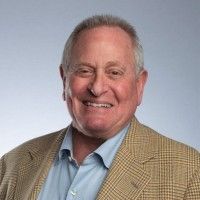
Ron Thalheimer is a financial services executive and transformation leader with more than 40 years of experience across banking, insurance, and investment services. His career began in banking in Chicago and later took him to London before he spent more than two decades with Fidelity Investments in Boston. His leadership experience includes organizational transformation, service operations, client relationships, and the practical work of building cultures that support stronger business outcomes.
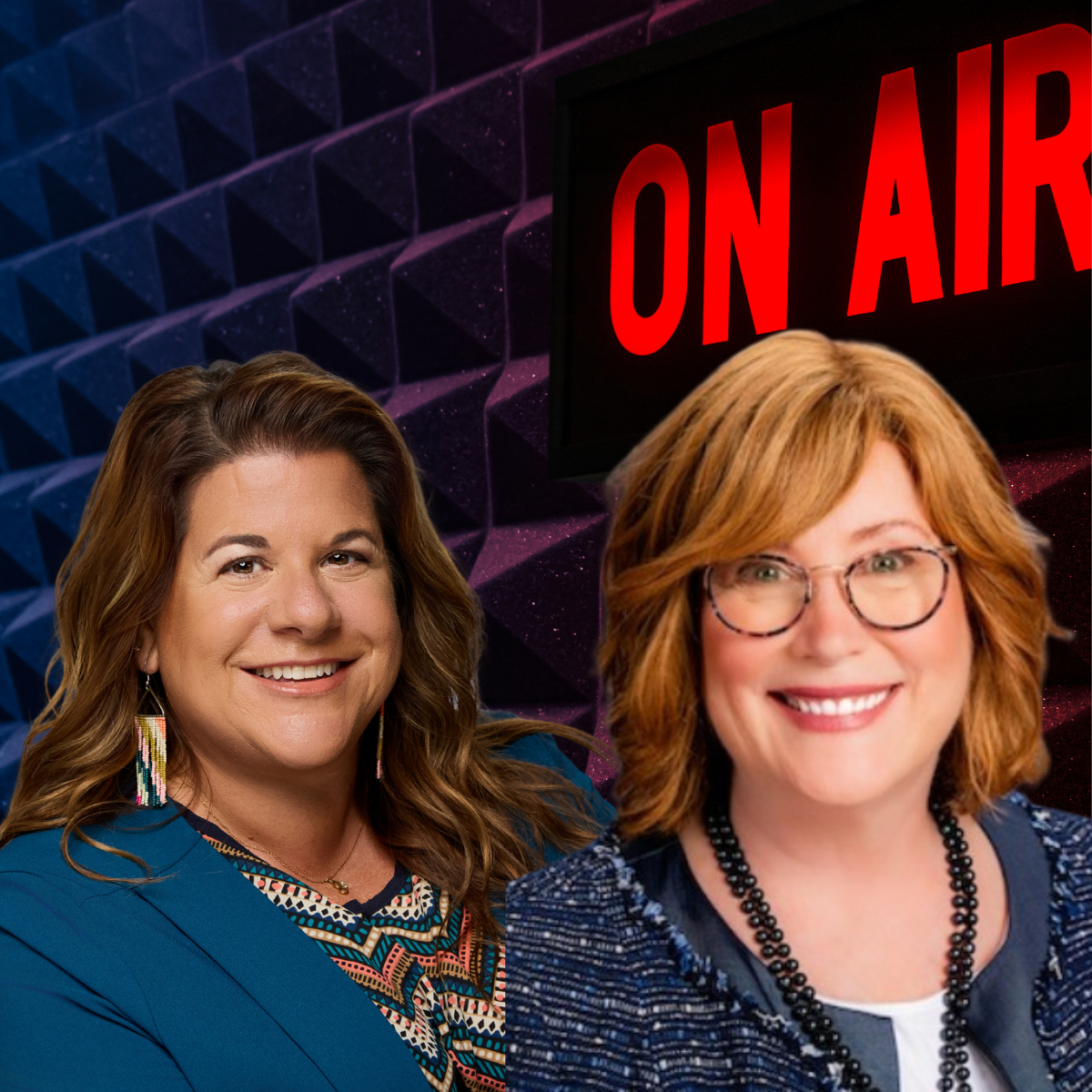
Meet Your Hosts
Dr. Kristine Gentry
Cultural anthropologist and founder of Culture Grove. Kristine brings a deep understanding of human behavior, systems, and storytelling to help companies cultivate thriving cultures.
Monica M. Smith
Global culture expert and founder of Tradewinds Career Consulting. Monica draws from lived experience leading diverse, multicultural teams across the world to help leaders navigate complexity with clarity.
Subscribe to the Show on Your Favorite Podcast Platform
Troy B.
"Loving the show! I’ve resisted downloading Spotify all my life but finally got to it because I heard a bit of what you guys did and wanted more! Good luck on this journey!"
Michela M.
"I could listen to these ladies for hours! What a great resource for business owners, managers, and employers!"
About Collaborative Culture
Collaborative Culture explores the beliefs and behaviors that make or break organizations. Co-hosts Dr. Kristine Gentry and Monica M. Smith examine how leaders and employees can strengthen trust, navigate differences, and create cultures where people and performance thrive.
The podcast approaches culture as an operating system—not a workplace perk or a collection of words on a wall. Through expert interviews and candid conversations, Collaborative Culture connects research, lived experience, and practical strategies that listeners can apply in their own organizations.
